Appearances and reality
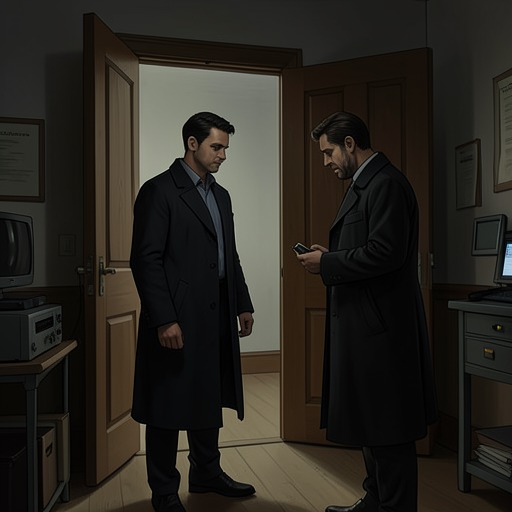
The Seven Dials MysteryAppearances and reality is a central interpretive pattern in the novel, where visible roles repeatedly mislead both characters and readers. Bundle’s deliberately meek acquiescence hides an independent plan; Loraine Wade’s apparent willingness to be excluded coexists with resolve and preparation; and Jimmy Thesiger’s gentlemanly voice conceals a murderer. The final explanation complicates the expected image of a secret society as well: its theatrical secrecy is real, but its members are amateurs serving Superintendent Battle’s department.
Roles and Deliberate Misreading
Bundle’s conduct at the abbey makes the contrast between outward behavior and private intention explicit. While Jimmy and Bill focus on the inside of the building, Bundle means to attend to its exterior. She offers no criticism of the limited role assigned to her, and takes pleasure in how completely the men accept her apparent meekness. Her amusement rests on their misjudgment: she thinks Bill should know her better, while Jimmy, who has only recently become acquainted with her, has even less reason to suppose she can be dismissed so easily. Once alone, she changes out of her evening dress and into riding breeches. The practical choice of clothing gives physical form to the plan her compliant manner has concealed.
The episode makes deception more than a trick played on the reader. Bundle knows that others have mistaken her, and consciously lets the mistake stand because it gives her room to act. Her performance is therefore a tactical choice rather than evidence of passivity. The distinction matters: she is not simply revealed to possess unexpected initiative after seeming harmless; she has allowed others to underestimate her and takes pleasure in the resulting freedom of action.
Loraine Wade presents a quieter version of the same discrepancy. Bundle had once questioned whether Loraine was as meek as she appeared, but the suspicion faded when Loraine seemed reasonable and willing to be kept out of events. Yet Loraine’s face suggests determination in its firm mouth and resolute jaw. She rises, puts on a tweed coat and skirt, slips an electric torch into a pocket, and takes a small ivory-handled pistol she bought at Harrods the previous day. The contrast between her apparently excluded position and these concrete preparations does not, by itself, disclose everything she knows or intends. It does establish that the appearance of compliance cannot safely be read as proof of helplessness.
What Witnesses Can and Cannot See
The account given by Countess Anna Radzky shows how a sincere report may remain incomplete. She describes hearing two men trying to kill one another in a dark room, furniture crashing as they struggled. She distinguishes a hoarse, croaking voice, repeating a plea to be released, from the other man’s cultured English voice. Jimmy looks gratified by her account. Her description supplies vivid details of the apparent encounter, but the contrast between the criminal-sounding voice and the gentlemanly one does not establish which man is actually a criminal. In retrospect, Jimmy’s satisfaction carries an irony the Countess’s immediate interpretation cannot resolve: respectable speech is a poor guarantee of innocence.
When the Countess demands to know what has happened, Battle gives the company a concise account of attempted robbery and stolen political papers belonging to Sir Stanley Digby. He says the thieves nearly escaped and credits Loraine with stopping them. This explanation identifies a real consequence of the episode and recognizes Loraine’s intervention, but the final disclosure gives the surrounding events a larger context. The difference between an account that explains the immediate incident and an explanation that exposes the concealed operation is part of the novel’s method: facts are not necessarily false when first presented, but their significance can change as withheld connections emerge.
The Society Behind Its Trappings
Bundle’s bewilderment at the end—nothing is what it seems—marks the moment when the mystery turns from mistaken appearances to a reassessment of the whole organization. Battle warns Lady Eileen Brent against assuming that the society must resemble a familiar fictional conspiracy: a criminal organization governed by an unseen master criminal. His experience, he says, has not led him to encounter that pattern. Instead, he describes a capable band of amateurs whose work has helped his department, and whose members accepted genuine danger out of a taste for it and a wish to serve their country.
Battle’s explanation does not make the society’s secrecy imaginary. Mr. Mosgorovsky runs the club and other operations, and Battle identifies him as a valuable secret anti-Bolshevist agent in England. The members’ melodramatic trappings are therefore both a source of theatrical appearance and part of a real, dangerous undertaking. The contrast is not simply between a fake organization and a genuine one: its amateur character and romantic style coexist with effective service and serious risks. What changes is the meaning assigned to those features. The disguise conceals neither a super-criminal nor an empty game, but a group whose dramatic habits accompany work that Battle says others could not have done.
The Reversal of Trust
The most consequential misreading concerns Jimmy Thesiger. The evidence of his cultivated voice and apparently ordinary social role has made him legible as a gentleman, while the crimes remain to be explained. Battle’s final identification reverses that reading directly: Jimmy is the man Bundle knows well, and he has been arrested that afternoon. The disclosure links his respectable appearance to the deception behind the deaths of Gerald Wade and Ronald Devereux; the earlier impressions of charm and familiarity can no longer be treated as reassurance.
This reversal also distinguishes Bundle’s performance from Jimmy’s. Bundle uses others’ underestimation to pursue an investigation, whereas Jimmy’s concealment protects a criminal identity and enables harm. Loraine’s apparent acquiescence likewise proves compatible with purposeful action, while Battle’s account reveals that the society’s secrecy serves a public purpose despite its theatrical surface. Across these different cases, appearance is not a reliable moral verdict. The novel makes readers revise their judgments as actions, preparations, testimony, and eventual disclosure accumulate—and shows that discovering what is true depends on asking what each outward role has allowed its bearer to do.